

Steven Culpepper, University of Illinois Urbana-Champaign
A few of my favorite things: Diagnostic models, efficient Bayesian computation, and novel latent structures for change
2026 Presidential Address
This Presidential Address at the 91st International Meeting of the Psychometric Society focuses on open science and methodological innovations in the use of hidden Markov models (HMMs) for diagnostic research. HMMs are classic framework for longitudinal data analysis with widespread application in psychometrics. HMMs consist of two types of parameters: 1) an emission matrix that characterizes the relationship between hidden states and observed responses; and 2) a transition matrix that governs the likelihood of respondents transitioning between states over time. A fundamental issue in the application of HMMs for diagnostic research is the construction of robust models. Recent research used diagnostic models to construct a parsimonious emissions matrix for both confirmatory and exploratory settings. Diagnostic models incorporate structure into emission matrices by either pre-specifying or estimating an underlying Q matrix, which indicates which attributes are required by each item. In contrast, there is limited research on methods for imposing structure into the transition matrix. The general unavailability of parsimonious models for diagnostic transition matrices poses a critical challenge in the widespread application of HMMs in diagnostic research. This research offers two contributions. First, a novel, identifiable structure for diagnostic transition matrices is proposed and is referred to as a mixture-transition model. Second, supporting principles of open science is critical for disseminating psychometric advances and providing practitioners with cutting-edge tools to test theories. Accordingly, an efficient implementation of Stan is offered to provide practitioners with an accessible computational tool. Simulation results provide evidence that the new Stan implementation for the deterministic input, noisy “and”-gate (DINA) model is computationally more efficient. Furthermore, empirical results from two applications suggest that the new mixture transition new model provides the best fit in comparison to existing competitors. The implications of the proposed innovations are discussed for psychometric and applied research.
about the speaker
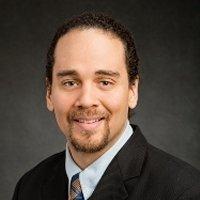
Dr. Steven Andrew Culpepper is a Professor in the Department of Statistics at the University of Illinois at Urbana-Champaign. He earned a Ph.D. in Educational Psychology from the University of Minnesota Twin Cities. Dr. Culpepper’s research examines issues related to psychometrics, finite mixture models for learning interventions, and Bayesian computation. His recent research focuses on restricted latent class models and hidden Markov models for applications involving diagnostic assessments and the fine-grained evaluation of learning interventions, providing foundational methodologies for modern AI-driven and adaptive educational testing environments. To date, he has coauthored over 80 publications and developed open-source software packages to implement complex Bayesian and psychometric methods. He has received support for several psychometric projects from the Spencer Foundation, the American Educational Research Association (AERA), and the National Science Foundation (NSF).
Professor Culpepper is a past Editor-in-Chief of the Journal of Educational and Behavioral Statistics, former Associate Editor for Psychometrika and the IMPS Proceedings, and has served on the editorial boards of the Journal of Educational Measurement and Organizational Research Methods. His extensive professional service includes serving as the 2025-2026 President of the Psychometric Society, membership on its Board of Trustees of the Psychometric Society (2018-2022), the Grants Program Governing Board of the AERA, the Technical Review Panel of the National Indian Education Study, and the Design and Analysis Committee for the National Assessment of Educational Progress (NAEP).
At UIUC, Professor Culpepper has been recognized with the Arnold O. Beckman Research Award from the Campus Research Board, the 2021-2022 College of Liberal Arts and Sciences Dean’s Distinguished Professorial Scholar award, the 2021 Campus Distinguished Promotion Award, and the 2021-2024 Department of Statistics Data Science Founder Professorial Scholar title. He has been included on the UIUC “List of Teachers Ranked as Excellent By Their Students,” a co-recipient of the 2021 National Council on Measurement in Education (NCME) Bradley Hanson Award, and an elected member of the Society of Multivariate Experimental Psychology. Professor Culpepper actively collaborates on interdisciplinary research teams, advises undergraduate, masters, and doctoral students, and works to broaden the participation of under-represented and first-generation college students in the mathematical and data sciences.